Does Cryonics Damage the Brain? Ice Crystals and Cell Damage Explained
Concerns
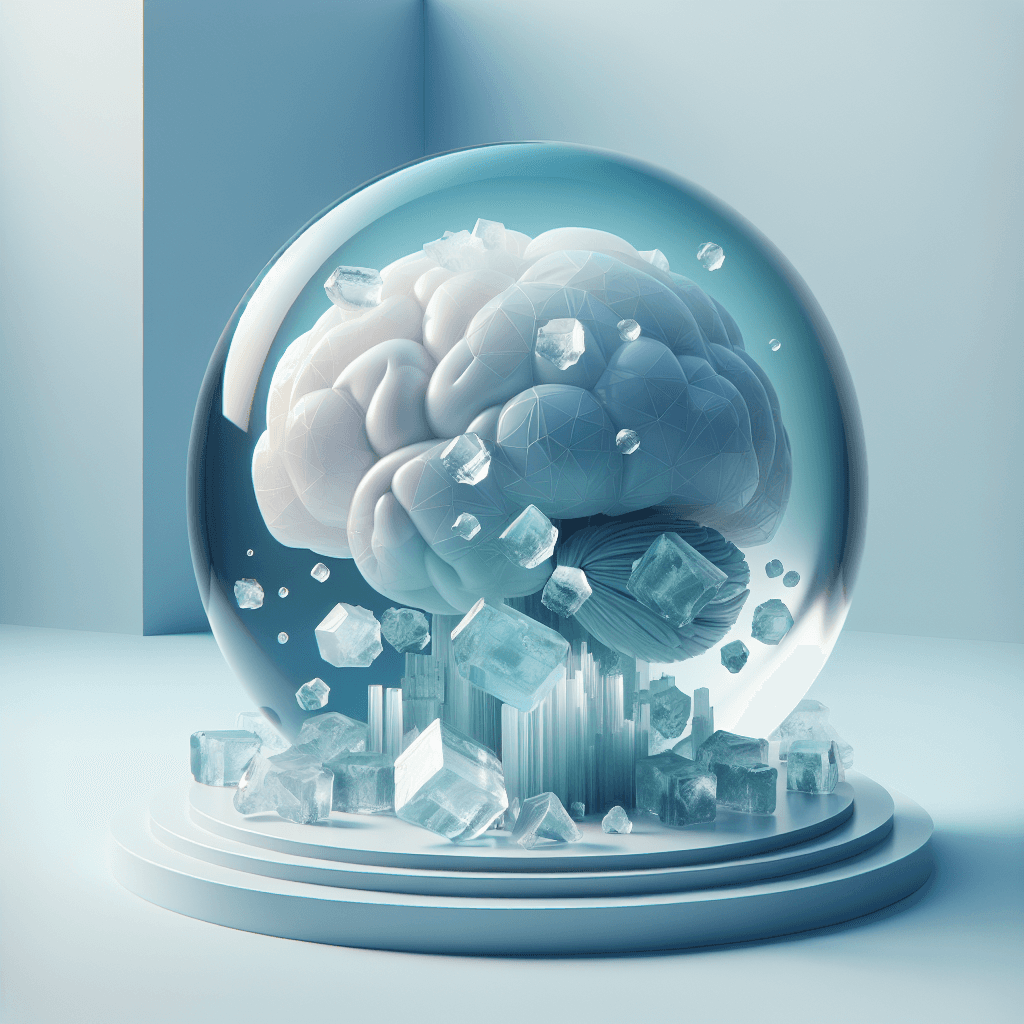
The Ice Crystal Problem Is Real — Just Not Relevant to Modern Cryonics
If you've ever put meat in the freezer and thawed it out, you've seen what ice does to biological tissue: cell membranes rupture, structure degrades, texture changes. It's a fair concern to bring to cryonics. If you're freezing a human brain, surely ice crystals would cause catastrophic damage?
The concern is scientifically valid. It's also about 40 years out of date. Modern cryonics doesn't freeze tissue. It vitrifies it — and at Saka Cryo, we go further with a method that has won independent scientific recognition for the quality of preservation it achieves.
Why Traditional Freezing Is Damaging
Water, when frozen, forms ice crystals. Those crystals expand, and their sharp edges mechanically rupture cell membranes. At the scale of brain tissue, this creates widespread structural damage — disrupting the precise neural connections that encode memory, personality, and cognition. If cryonics used simple freezing, the concern would be entirely justified.
But this problem was identified and addressed by cryonics researchers decades ago. The solution is vitrification.
Vitrification: Glass, Not Ice
Vitrification replaces the water in tissue with cryoprotectant solutions — compounds similar in concept to antifreeze. When tissue infused with these agents is cooled, it doesn't freeze. Instead, it transitions into a glass-like solid state: amorphous, stable, and free of ice crystals. The molecular structure is arrested in place without the mechanical disruption of crystallization.
The result is tissue that holds its structure at cryogenic temperatures without ice damage. This is not speculative — vitrification is also used in IVF to preserve embryos and oocytes, and it is an established technique in cryobiology.
ASC: The Method Saka Prefers
At Saka Cryo, our preferred approach goes a step further: aldehyde-stabilized cryopreservation, or ASC. The process begins with a glutaraldehyde fixation step that chemically stabilizes brain tissue before vitrification occurs. This fixation step crosslinks proteins and locks the cellular architecture in place with extraordinary precision — making the tissue biologically inert and structurally stable even before cryoprotectants are introduced.
The result is preservation at a level of detail that can be verified under electron microscopy: individual synapses, membrane structures, and the fine architecture of neural connections — the connectome — preserved at near-atomic resolution.
This is not a theoretical claim. ASC won the Brain Preservation Foundation Prize — an independently judged scientific competition specifically designed to evaluate the quality of whole-brain preservation. The prize was awarded for demonstrating that ASC preserves brain structure at a quality sufficient for the information encoded in the connectome to be intact.
What We're Actually Preserving
It's worth being precise about the goal. Cryonics, and ASC in particular, is not trying to keep your cells biologically alive — it is trying to preserve the *information* encoded in your brain's physical structure.
Your identity — your memories, personality, values, habits — is encoded in the pattern of connections among your roughly 86 billion neurons. That pattern, called the connectome, is what makes you you. Preserving it with structural fidelity is what we provide at Saka through cryopreservation.
ASC-preserved tissue is biologically inert after fixation, which also means it is resilient to environmental disturbances. Unlike vitrified-only tissue, which must be maintained at precise cryogenic temperatures without interruption, ASC-stabilized tissue has a robustness profile that is better suited to long-term storage through unpredictable future conditions.
The Honest State of the Science
Cryonics asks us to trust that future technology will be able to read and restore information from preserved neural structure. That's a significant ask — and we don't pretend otherwise. But the first step — preserving that structure faithfully — is one we can evaluate today. And ASC has been evaluated, rigorously, by independent scientists.
Ice crystals are not the problem they once were. The question worth asking now is whether the information is preserved well enough for future medicine to work with. The evidence is a resounding yes.