Whole-Body vs. Brain-Only (Neuro) Cryopreservation: What's the Difference?
Basics
Whole-Body vs. Brain-Only (Neuro) Cryopreservation: What's the Difference?
When people first hear about cryonics, they often picture the whole body being preserved — suspended in liquid nitrogen, waiting for a future that can bring them back. That's one option. But there's another approach that many cryonicists consider more practical and scientifically sound: preserving only the brain. Understanding the difference between these two paths is one of the first decisions anyone exploring cryonics should think through.
What Is Whole-Body Cryopreservation?
Whole-body cryopreservation does exactly what it sounds like — the entire body is preserved after legal death. The appeal is intuitive: you wake up (in whatever future makes that possible) as a complete physical person. No reconstruction required, at least not in theory.
But whole-body preservation comes with real tradeoffs. It requires significantly more storage space, more cryoprotectant, and higher ongoing costs. The body is also harder to perfuse uniformly with cryoprotectant chemicals than the brain alone, which can mean less consistent preservation quality across all tissues. And it assumes that future technology will not only be able to revive you, but also successfully repair or regenerate every organ system in the body — a much larger ask.
What Is Neuro (Brain-Only) Cryopreservation?
Neuro cryopreservation focuses on preserving just the brain — or sometimes the head — rather than the entire body. At first glance, this might seem like the more radical choice. In practice, many researchers and cryonicists consider it the more scientifically grounded one.
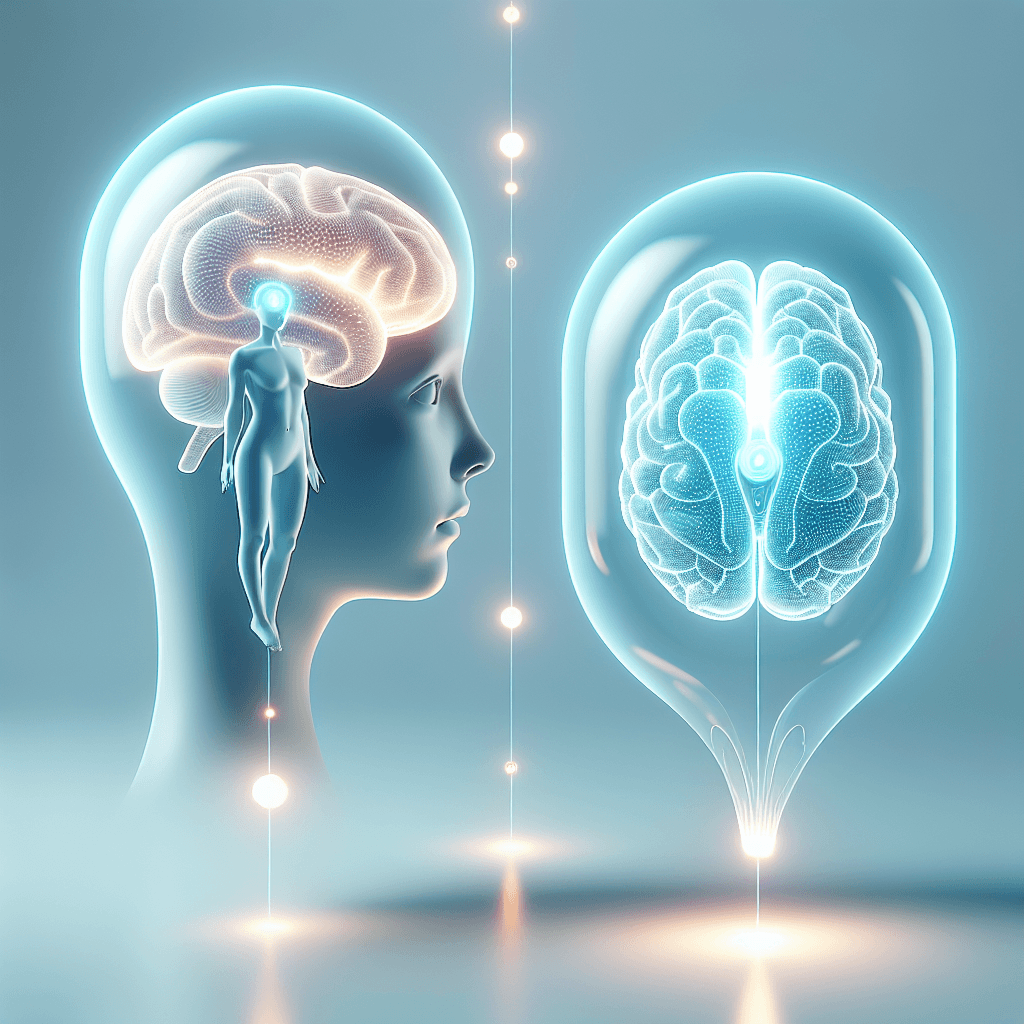
The reasoning starts with a simple premise: you are your brain. Your memories, personality, skills, beliefs, relationships — everything that constitutes who you are — is encoded in the structure of your brain, specifically in the vast network of neural connections called the connectome. Your body, by contrast, is essentially biological hardware. Remarkable hardware, but replaceable hardware.
If future technology can revive a cryonics patient at all — whether through molecular repair, whole-brain emulation, or some method we haven't imagined yet — generating a new, healthy body from that person's genetic blueprint is likely a far simpler problem than repairing decades of accumulated cellular damage across every organ in a preserved body. The brain is the irreplaceable part.
The Practical Case for Neuro
Beyond the philosophical argument, neuro preservation has concrete practical advantages. It costs significantly less — both upfront and in ongoing storage. It requires less physical infrastructure. And because the brain is a smaller, more uniform structure than the whole body, it can be perfused with cryoprotectant more effectively, resulting in higher-quality preservation.
None of this means whole-body preservation is without merit. Some people have strong personal, philosophical, or religious reasons for wanting their entire body preserved. That's a legitimate choice, and organizations exist that offer it.
What Saka Cryo Focuses On
Saka Cryo specializes in brain preservation. This reflects our view that the brain is where the information that makes you you actually lives — and that preserving it with the highest possible fidelity is the most meaningful thing cryonics can offer today. Our process uses Aldehyde-Stabilized Cryopreservation (ASC), which combines chemical fixation with vitrification to produce exceptionally well-preserved brain tissue that is resilient to long-term storage risks.
At around $40,000 — a fraction of what many cryonics providers charge — brain-only preservation at Saka Cryo makes this option accessible without forcing a choice between quality and cost.
The Bottom Line
Whole-body and neuro cryopreservation both represent serious attempts to give people a chance at a future beyond today's medicine. The difference comes down to what you believe future technology will need to work with — and what level of preservation quality and cost makes sense for your situation. If you believe (as many scientists and cryonicists do) that the brain is the seat of identity and that bodies can be replaced, neuro preservation is a compelling, practical choice. If you want your entire physical form preserved, whole-body is available — just at a higher price and with different tradeoffs.
Either way, the decision is worth making carefully. The information here is a starting point.