Will I Still Be 'Me' After Cryonic Revival? The Identity Question
Concerns
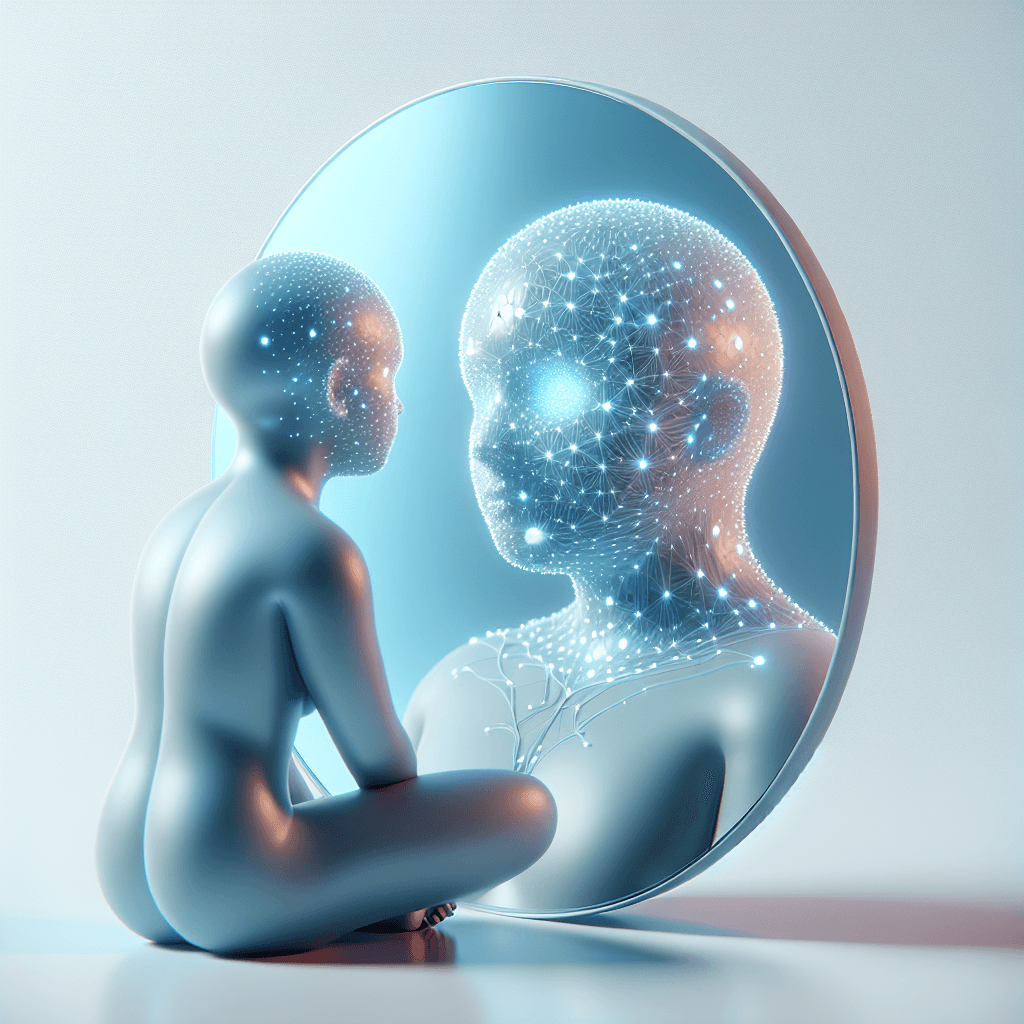
The Question That Stops People in Their Tracks
You're considering cryonics, and then a thought surfaces that's harder to shake than any logistical concern: even if it works, will the person who wakes up actually be you? It's one of the first question people get hung up on.
The short answer is: by every reasonable philosophical standard we apply to identity in daily life, yes. Here's why.
You Are a Pattern, Not a Collection of Atoms
The atoms in your body are not the same atoms you were born with. Over years, almost every molecule in your body is replaced through metabolism, cellular turnover, and biological maintenance. Yet no one seriously argues that you stopped being yourself somewhere along the way. That's because identity doesn't live in specific atoms — it lives in the pattern those atoms form.
Your memories, your personality, your habits and values — these are encoded in the physical structure of your brain: the precise connections between roughly 86 billion neurons, shaped by every experience you've ever had. That structure is what makes you you. And that structure is exactly what cryonics aims to preserve.
Derek Parfit and Psychological Continuity
The philosopher Derek Parfit spent much of his career wrestling with personal identity, and his conclusions are worth sitting with. In Reasons and Persons, Parfit argued that personal identity is not some metaphysical essence but a matter of psychological continuity — overlapping chains of memories, intentions, beliefs, and personality traits that connect your present self to your past and future selves.
By this standard, identity is not binary. It's a spectrum of connectedness. And critically, gaps in consciousness don't break that continuity. You go under general anesthesia and wake up hours later with no subjective experience of the time that passed — yet no one questions whether you're the same person who went into surgery. You fall into deep, dreamless sleep every night and emerge as yourself each morning.
The pattern persisted. That's what matters.
The Ship of Theseus — and Why It's the Wrong Frame
Some raise the Ship of Theseus paradox: if you replace every plank in a ship, is it still the same ship? Applied to cryonics: if revival requires significant biological repair or reconstruction, is it really you being revived?
This is a real philosophical puzzle, but it applies just as much to the ongoing process of being alive. Your brain today is not the same physical object it was ten years ago. What threads the self together across time is not material continuity but informational continuity — the persistence of the pattern. Cryonics, done well, preserves that pattern at the moment of legal death, before it degrades.
Sleep Is the Best Everyday Analogy
Consider what happens during deep sleep. Your consciousness — in any experiential sense — is absent. There is no continuous stream of awareness bridging last night's you to this morning's you. Yet every morning you wake up as yourself, because the physical substrate encoding your identity remained intact.
Cryonics is, in philosophical terms, a very long sleep. Consciousness is not destroyed — the infrastructure supporting it is preserved, awaiting conditions that don't yet exist but may one day.
What Cryonics Actually Preserves
At Saka Cryo, the goal of preservation is structural fidelity of the brain — the connectome, the map of neural wiring that encodes memory and personality. With aldehyde-stabilized cryopreservation, brain tissue is fixed and preserved at a level of detail visible under electron microscopy. We're not preserving a vague approximation. We're preserving the substrate of identity with scientific rigor.
Is there philosophical uncertainty? Yes. But that uncertainty exists for every gap in consciousness. The question isn't whether cryonics is philosophically perfect — it's whether it preserves enough of what makes you you. By the most grounded theories of personal identity, the answer is yes.