What Is Cryonics?
Basics
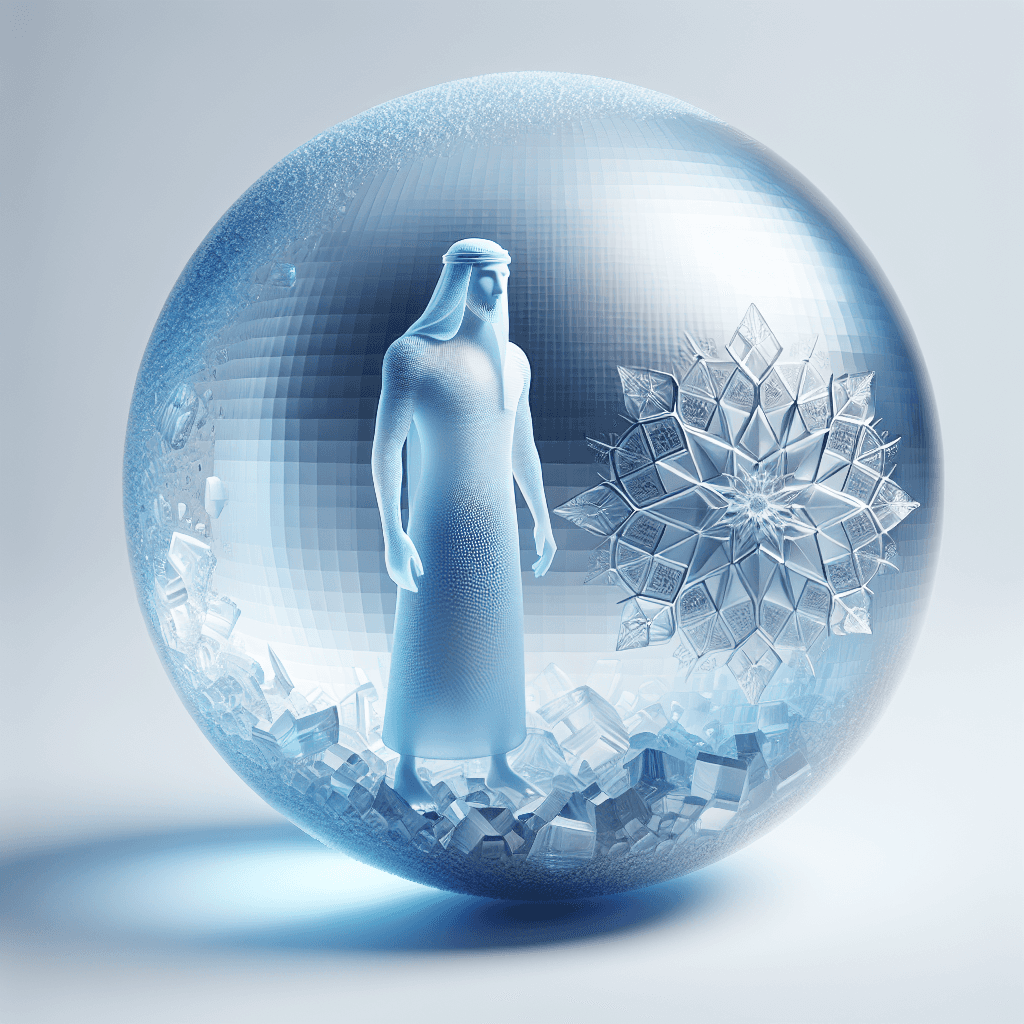
Cryonics is the practice of preserving a person's brain immediately after legal death, with the goal of reviving them once future medical technology makes that possible. It's not science fiction, and it's not about cheating death in some mystical sense — it's a bet that what makes you you is the information encoded in your brain, and that information can be protected.
The Core Idea: You Are Your Brain's Pattern
The fundamental premise of cryonics is that identity and memory are stored as physical structures in the brain — the connections between neurons, the precise architecture of synapses. If those structures can be preserved with enough fidelity, a sufficiently advanced future technology might be able to restore function or "read" who you were. This is sometimes called information-theoretic preservation. The goal isn't to freeze a body and thaw it like a steak. The goal is to preserve the pattern that is you before it degrades beyond recovery.
From this perspective, legal death isn't necessarily the end. It's the point at which current medicine stops — not necessarily the point at which the information in your brain is gone. Cryonics aims to act in that window.
A Brief History
Cryonics as a serious concept dates to the 1960s. Robert Ettinger, a physics teacher and science fiction enthusiast, published The Prospect of Immortality in 1964, arguing that if you could preserve a body quickly enough after death, future medicine might be able to repair and revive it. His ideas seeded an entire subculture of early adopters and researchers.
The first person to be cryonically preserved was James Bedford, who was preserved in 1967 and remains in storage to this day. Since then, the field has grown steadily. As of now, more than 500 people have been cryonically preserved worldwide, with thousands more signed up.
What Cryonics Is Not
Cryonics often gets lumped in with science fiction tropes — the frozen astronaut, the comic-book villain in suspended animation. Those portrayals involve simple freezing, which destroys cells through ice crystal formation. Real cryonics uses cryoprotectant chemicals to prevent ice crystals from forming at all, a process called vitrification. The tissue doesn't freeze in the damaging sense; it transitions into a glass-like solid state that preserves structure at the molecular level.
Cryonics is also not a medical procedure performed on living people. It begins only after legal death has been declared. This distinction matters both ethically and legally.
How Saka Cryo Approaches It
Saka Cryo uses a technique called Aldehyde-Stabilized Cryopreservation (ASC) — the method that won the Brain Preservation Foundation prize for quality of neural preservation. ASC combines chemical fixation with vitrification to produce exceptionally stable, high-fidelity preservation. Unlike traditional vitrification, which must be kept below -130°C at all times, ASC-preserved tissue is biologically inert and resilient, making long-term storage more reliable.
The goal at Saka Cryo is the same as the goal of cryonics generally: preserve the structure of the brain, as faithfully as possible, so that future technology has the best possible chance of recovering who you were.