Can You Actually Be Revived from Cryonics? What Revival Would Look Like
Basics
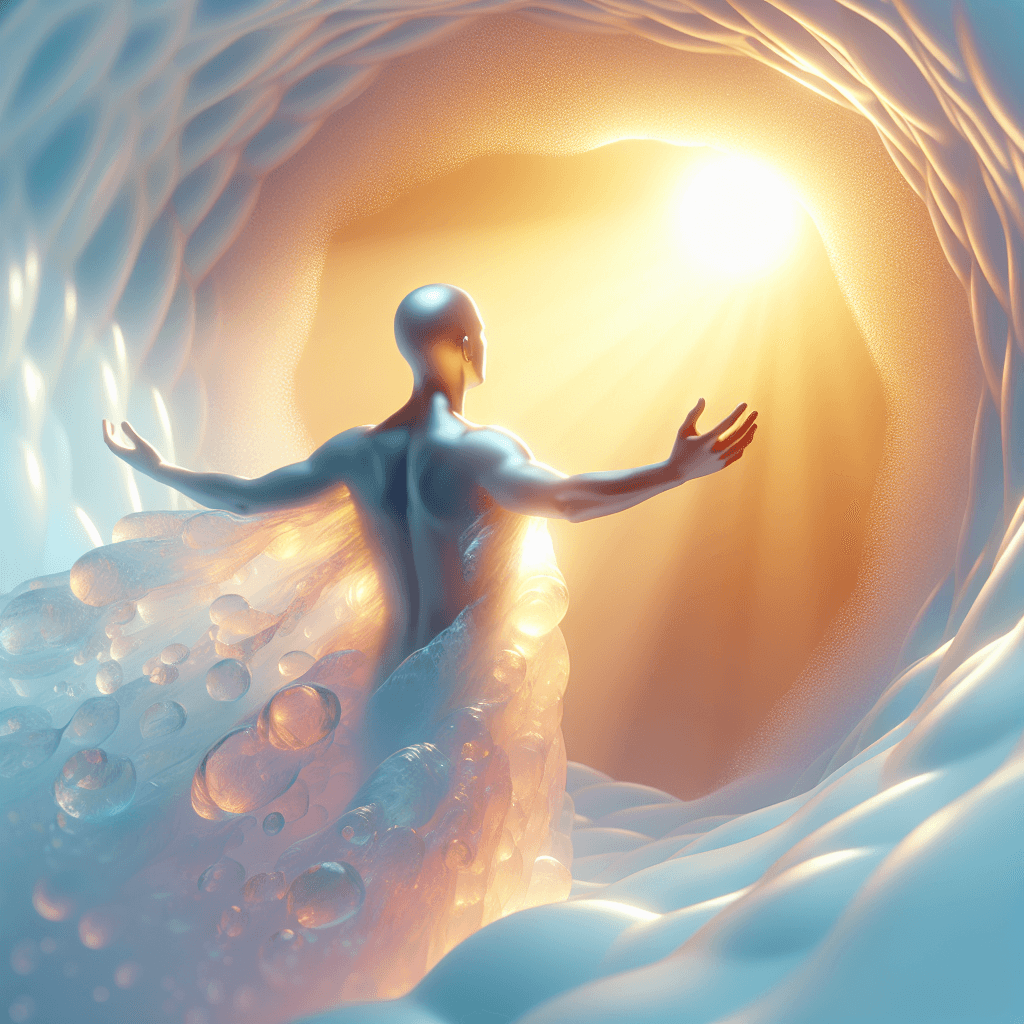
Can You Actually Be Revived from Cryonics? What Revival Would Look Like
This is the question that sits at the center of everything in cryonics — and the honest answer starts with an admission: no one has been revived. Not yet. But the more interesting question isn't whether revival has happened. It's whether revival is possible in principle, and what it would actually take. That's where the science gets genuinely compelling.
What Cryonics Is Actually Trying to Preserve
To understand revival, you have to understand what cryonics is preserving and why. The goal isn't simply to freeze a body and thaw it out later. It's to preserve the brain's physical structure — specifically the connectome, the complete map of neural connections that encodes memory, personality, and everything that makes you who you are — with sufficient fidelity that this information could one day be recovered and used.
This is sometimes called information-theoretic preservation. The idea is straightforward: if the physical structure of your brain is intact, the information is intact. And if the information is intact, there is at least a path — however technologically distant — to you continuing to exist. If that structure is lost, through biological decay, cremation, or ice crystal damage, the information is gone. That loss is final.
Good cryopreservation, particularly with methods like Aldehyde-Stabilized Cryopreservation (ASC), can preserve neural architecture at the nanoscale level. That's been independently validated. The structure is there. The question is what future technology does with it.
What Revival Might Actually Look Like
Revival doesn't necessarily mean warming someone up and watching them wake up. That might be one path, particularly if molecular repair technologies advance to the point where cellular damage can be corrected atom by atom — essentially rebuilding a living brain from a preserved template. Nanotechnology researchers have speculated about exactly this kind of targeted biological repair for decades, and while it remains firmly in the future, the underlying physics doesn't prohibit it.
A second pathway involves whole-brain emulation. Rather than repairing and reactivating the physical brain, future technology might scan the preserved connectome in sufficient detail to reconstruct it as a running simulation. The resulting mind would have continuous memory and identity with the person who was preserved. Whether this counts as the same person is a philosophical question — but it's not obviously different from the continuity of identity you experience when you wake up each morning.
A third pathway might involve hybrid approaches we haven't fully conceived yet — combinations of biological repair and digital reconstruction that leverage whatever technologies prove most feasible in the decades or centuries ahead.
The Trajectory of Relevant Science
None of these revival scenarios are available today. But the scientific fields they depend on are all moving in the right direction, and in some cases moving quickly. Connectomics — the systematic mapping of neural connections — has advanced dramatically in the past decade, with researchers now able to map the complete wiring of small organisms and increasingly large brain regions. Artificial intelligence is accelerating the analysis of this kind of complex biological data. Nanotechnology continues to progress toward finer and finer manipulation of matter at the molecular scale.
The honest framing isn't "we know this will work" — it's "the science required for revival is being actively developed, it is not prohibited by physics, and the trajectory is encouraging." Cryonics is a bet on the future, not a guarantee from it.
Why Preserve Now Rather Than Wait?
One reasonable question: if revival technology is so far off, why not wait until it's closer? The answer is that waiting means dying without preservation — and biological decay and cremation are genuinely irreversible in a way that cryopreservation is not. Once the neural structure is gone, no future technology can recover what isn't there. The window for preservation is at the moment of legal death. There is no later option.
Preserving now, with the best available methods, keeps the possibility open. Not waiting for perfect technology — choosing to remain a candidate for whatever technology eventually arrives.
The Bottom Line
Revival from cryonics is uncertain. It requires technologies that don't fully exist yet. But the physical basis for revival — a preserved brain structure with intact neural connectivity — is achievable today with methods like ASC. What happens after that depends on a future we can't fully predict. What we can say is that preservation preserves the option, and that the relevant sciences are advancing. That's not a guarantee. But for many people, it's enough to make the choice worth making.